
- China–GCC goods trade reached USD 293.3 billion in 2025. Saudi Arabia and the UAE are China's two biggest Middle East markets.
- You can start without a Gulf company. noon Global Shipping needs only a Chinese business licence, and noon pays the destination VAT.
- Amazon's 2026 offer for new Chinese sellers includes a USD 50,000 referral-fee voucher and FBA inbound cashback until 30 December.
- Regulated products need SABER for Saudi Arabia: a SAR 500 product certificate plus a SAR 350 certificate for each shipment.
- Winners follow the same path: test cross-border, then stock a local warehouse, with Arabic listings and WhatsApp support.
The Gulf is wide open for China-based sellers right now.
Shoppers in Saudi Arabia and the UAE are young, well-off and live on their phones. Fewer than one in ten sellers on noon is Chinese, and both Amazon and noon are paying to recruit more.
Here's what that looks like. An air fryer with an Arabic menu costs CNY 150 ex-factory and sells for SAR 499 on noon. Margins like that are hard to find on US or EU marketplaces now.
You'll see why the timing is good, which entry path fits you, and how to handle shipping, payouts and compliance. Each step links to a deeper guide.
Why sell to the Gulf from China now?
Because demand is strong, competition is thin and the platforms are still handing out incentives. Six reasons stand out:
- China is the top trade partner. China is Saudi Arabia's biggest trading partner, and the UAE is China's largest export market in the Middle East. Chinese goods are familiar and trusted here.
- Basket values are high. The Gulf imports over 85% of its everyday consumer goods. Shoppers care about availability and fast delivery, and they'll pay for a good product.
- Few Chinese sellers so far. Seller density is far lower than on US or EU Amazon. Noon doesn't gate new-listing traffic on reviews, so a strong new listing can rank organically.
- Young, mobile-first shoppers. Most Saudi nationals are under 35, and almost everyone is online. They browse, pay and watch ads on their phones.
- Platforms are subsidising Chinese sellers. Amazon runs its Middle East 10,000 Stores programme, and noon held recruitment summits in Shenzhen, Guangzhou and Hangzhou.
- Big sales peaks. Ramadan, Eid, White Friday and Saudi National Day each drive a spike. noon's orders rose 45% year on year during Ramadan 2026.
The UAE is the re-export hub: a lot of Chinese cargo lands at Jebel Ali and moves on to the rest of the Gulf. Saudi Arabia is the biggest single consumer market.
Which one first? My short answer, unpacked in UAE vs Saudi Arabia: the UAE to test, Saudi Arabia to scale.
Which Chinese brands are already winning?
Chinese brands are some of the biggest winners in Gulf ecommerce:
- SHEIN. It arrived in 2015 with a Dubai office and is now one of the most-visited fashion sites in Saudi Arabia. In 2025 it opened semi-managed UAE and Saudi stores, where sellers with local stock deliver in 2–3 days.
- Anker. Its Middle East revenue hit USD 110 million in 2022, up more than a third in a year. It doesn't compete on price: one of its cables sells for AED 69 in the UAE.
- Xiaomi. It was the region's second-biggest smartphone brand in the first quarter of 2025, with a 15.7% share.
- Chinese sellers on Amazon. Amazon says their FBA unit sales on its Middle East stores grew over 50% in 2024.
They share a playbook: localised listings, local stock and real after-sales service. The infrastructure behind that playbook came together fast:
- 2015SHEIN enters the Middle East
It opens a Dubai office and grows into the Gulf's fashion ecommerce leader.
- 2017noon launches; iMile starts in Dubai
noon is backed by Saudi Arabia's PIF and Emaar's founder. iMile pitches itself as the bridge for Chinese sellers.
- Early 2022J&T Express enters Saudi Arabia and the UAE
A Chinese courier now runs local last-mile delivery, with its MENA HQ in Riyadh.
- Aug–Sep 2023Trendyol Gulf and Temu launch
Temu went live in the UAE and Saudi Arabia in September and covered all six GCC states by early October.
- Nov 2023Amazon's Middle East 10,000 Stores
A plan to support 10,000+ new Chinese sellers a year for three years. Version 2.0 followed in Aug 2025.
- 2025SHEIN semi-managed; Cainiao GCC network
SHEIN opens UAE and Saudi semi-managed stores. Cainiao launches express delivery across all six GCC states.
- Apr 2026PingPong becomes noon's official payout partner
The same year, noon holds its first official China recruitment summits.
- Jun–Dec 2026Amazon FBA inbound cashback
New sellers get up to SAR 3,754 per ASIN, until 30 December 2026.
Four ways to enter the Gulf from China
Start light, then go heavy. Test on a marketplace first, and move stock into the region once something sells.
| noon Global Shipping (NGS) | Amazon Global Selling ME | SHEIN / Temu managed | Own store + 3PL | |
|---|---|---|---|---|
| Gulf company needed | No | No | No | Not to start |
| Chinese documents | Business licence | Licence, legal-rep ID, dual-currency card | Per platform | Depends on payments and customs |
| Markets | All six GCC states | Amazon.sa + Amazon.ae | UAE, Saudi Arabia | Your choice |
| How stock moves | Drop at noon's Shenzhen hub | FBA, or Amazon SEND first mile | Platform runs traffic and fulfilment | Your forwarder and 3PL |
| Pricing and payout | Your USD transfer price, paid in full after delivery | Your price, settled every 14 days | Platform-led | Your price, your checkout |
| 2026 new-seller offer | China recruitment team | USD 50k voucher + FBA cashback | ||
| Effort | Lightest | Medium | Light | Heaviest |
| Best for | Factories, testing | Brand owners | Supply chain, no ME team | Repeat buyers and margin |
noon Global Shipping (NGS)
Noon is the Gulf's home-grown marketplace, backed by Saudi Arabia's sovereign fund. Its China headquarters is in Zhejiang.
NGS is built for Chinese companies. You drop goods at noon's consolidation hub in Shenzhen's Bao'an district.
Noon handles international freight, customs, duties and last-mile delivery. You set a USD transfer price and get exactly that after delivery.
Returns don't go back to China either. Saleable items become local FBN (Fulfilled by noon) stock. See noon for Chinese sellers for the seven onboarding steps.
Amazon Global Selling: Middle East
Amazon runs Amazon.sa and Amazon.ae, which together serve five Gulf countries. You register with your Chinese business licence, and Chinese-speaking account managers and WeChat groups support onboarding.
This year's welcome pack is generous: a USD 50,000 referral-fee voucher, up to USD 1,000 in ad credit and FBA inbound cashback. The conditions are in Amazon Middle East for Chinese sellers.
SHEIN, Temu and Trendyol
Managed models split the work. You supply the goods, and the platform runs traffic and fulfilment. They suit factories with supply chains but no Gulf operations team.
Temu covers all six GCC states and opened a UAE local-seller programme in 2026. Trendyol is Turkish and majority-owned by Alibaba, with a strong Gulf fashion audience. It has a cross-border route for China and Hong Kong companies that needs a non-resident VAT certificate.
Your own store plus a local warehouse
Your own store gives you the best margin and the most work. You'll need an Arabic site, local payments (mada, Apple Pay, Tabby), COD and local stock.
Shopify, Salla and Zid all work. Most sellers add a store once a marketplace has proved which products sell, then use it for repeat buyers.
What sells best in the Gulf?
Electronics and fashion are the biggest categories by revenue. They're also the most crowded.
Smaller sellers usually break through in niches. Cifnews's 2026 noon data highlights these:
- Heat-driven drinkware. Insulated tumblers, water dispensers and coffee scales sell well in the heat.
- Motion-sensor lights and storage. One motion-sensor night light sold 70,000 orders in 30 days across Saudi Arabia and the UAE.
- Home, smart home and small appliances. Amazon also points to gaming monitors and gaming chairs.
- Natural, low-allergy beauty. Arabic labels on the pack are a must.
The full shortlist is in hot product categories in the Middle East.
Shipping: first mile and overseas warehouses
Use air to test, sea to scale and a local warehouse to stay.
| Mode | Transit | Typical cost | Best for |
|---|---|---|---|
| Air / Middle East DDP line | 3–7 days to Dubai | CNY 30–80/kg | First test batch |
| Sea LCL | 25–35 days | USD 120–250/CBM + port fees | Replenishment |
| Sea FCL | 18–25 days | Quoted per container; volatile in 2026 | Steady volume |
| Overseas warehouse / FBA / FBN | 1–3 days to the shopper | Storage + last mile | Long-term selling |
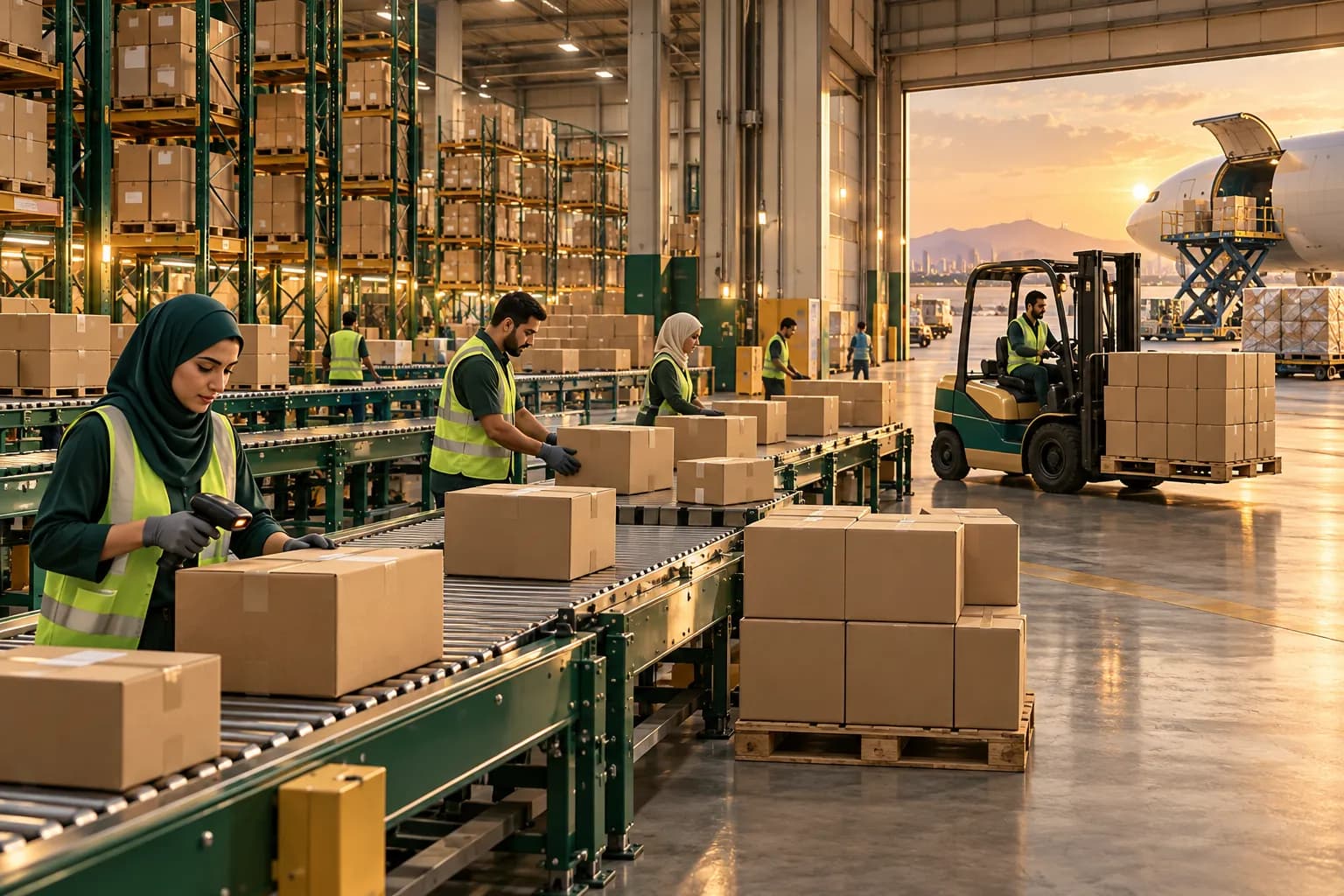
Why bother with local stock? SHEIN's semi-managed sellers who moved stock into the region saw some stores' monthly sales jump more than fourfold. A local warehouse also handles COD refusals and returns on the spot, instead of shipping them back to China.
Plan the UAE and Saudi Arabia separately. Trucking from Dubai into Saudi Arabia adds a second customs clearance and a few days.
- Shipping to Saudi Arabia? Read China to Saudi Arabia shipping.
- Shipping to the UAE? Read China to UAE shipping.
- Choosing a warehouse? Compare overseas warehouses in Dubai and Riyadh.
Getting paid: from the Gulf back to China
The Saudi riyal and UAE dirham are both pegged to the US dollar, so currency risk is low. What you're really comparing is the FX spread into CNY and the withdrawal fees.
| Provider | noon | Amazon Middle East |
|---|---|---|
| PingPong | Official noon partner since April 2026 | Serves Chinese Amazon sellers |
| LianLian Global | AED since 2019; USD added in 2026 | Amazon partner |
| WorldFirst | Supported; AED or USD account per store | Amazon.sa and Amazon.ae supported |
| Payoneer | Long-standing option; noon may ask for an authorisation letter | Supported |
Noon pays weekly and Amazon every 14 days. NGS sellers receive their USD transfer price directly. The fee comparison is in payout providers for Chinese sellers.
Compliance: SABER, VAT and company setup
Compliance is where planning ahead pays off most. The rules are clear, and each one is a step you can schedule.
Here's what else to line up:
- VAT. Saudi VAT is 15% and UAE VAT is 5%. A non-resident selling from Saudi stock must register from the first sale, with no threshold. On NGS, noon pays the destination VAT for you.
- Customs duty. Most goods pay 5% across the GCC. Saudi ecommerce parcels under SAR 1,000 are duty-free, but VAT still applies.
- Other approvals. SFDA covers cosmetics and food in Saudi Arabia. Wireless devices need type approval. In the UAE, regulated products go through ECAS.
- Company. You don't need a Gulf company to sell cross-border. At scale, a UAE free-zone company is the faster, cheaper regional base.
Want to see what a shipment really costs once it lands? Plug in your numbers:
GCC landed cost calculator
Duty, import VAT, customs fees and SABER costs for Saudi Arabia, the UAE and the wider GCC
GCC default is 5%. Check your HS code: some Saudi lines are 10-25%.
Your landed cost
- GoodsSAR 750
- Shipping + insuranceSAR 94CIF valueSAR 844
- Customs dutySAR 0
- Customs feesSAR 15
- Import VATSAR 129
- SABER (incl. VAT)SAR 0
- Total landed costSAR 988
- Under the de minimis threshold: no customs duty.
- Flat SAR 15 fee for online-store parcels up to SAR 1,000.
Estimates based on published ZATCA, Dubai Customs, SABER and GCC customs rules as of October 2026. VAT is charged on CIF + duty + customs fees. Confirm rates for your HS code with a licensed customs broker.
The step-by-step process is in the SABER certification guide. For entities, see company setup in Saudi Arabia and company setup in the UAE.
Localisation: look like a local store
Gulf shoppers spot machine-translated Arabic instantly. A listing that feels local converts far better.
The essentials:
- Bilingual Arabic and English listings. Without Arabic, your noon SKU may not show on the Arabic site. Use a native translator, not just a machine.
- No Chinese text on packaging. Keep imagery modest, and avoid pork or alcohol references.
- VAT-inclusive SAR or AED prices. The price shoppers see should be the price they pay.
- WhatsApp customer service. During Ramadan, contact buyers after sunset.
- Clean addresses. Since January 2026, Saudi parcels need a National Address short code, or they risk coming back.
New to the jargon? The EN · 中文 · عربي glossary has every term.
From zero to your first Gulf order
- 1
Pick a market and a platform
The UAE to test, Saudi Arabia to scale. Start with noon Global Shipping or Amazon Middle East. No Gulf company needed.
- 2
Check category rules
Look up SABER, SFDA or telecom requirements for your HS codes before you buy stock. See the SABER guide.
- 3
Open your seller account
Have your business licence, legal-rep ID and a dual-currency card ready. On Amazon, join Brand Registry within six months to unlock the USD 50k voucher.
- 4
Build Arabic listings
Arabic and English titles, bullets and images. Show VAT-inclusive SAR or AED prices.
- 5
Book your first mile
Air DDP for the first batch, sea LCL for restocks. Compare at least three quotes from the freight forwarder directory.
- 6
Set up payouts
Compare FX spreads and withdrawal fees across PingPong, LianLian and WorldFirst. See payout providers.
- 7
Launch into a sales peak
Use ad credits on new listings and aim for White Friday, Ramadan or Saudi National Day. Once it sells, move to FBA, FBN or an overseas warehouse.
Notes for factories and wholesalers
Selling B2B, or running a factory? Three more routes are worth knowing:
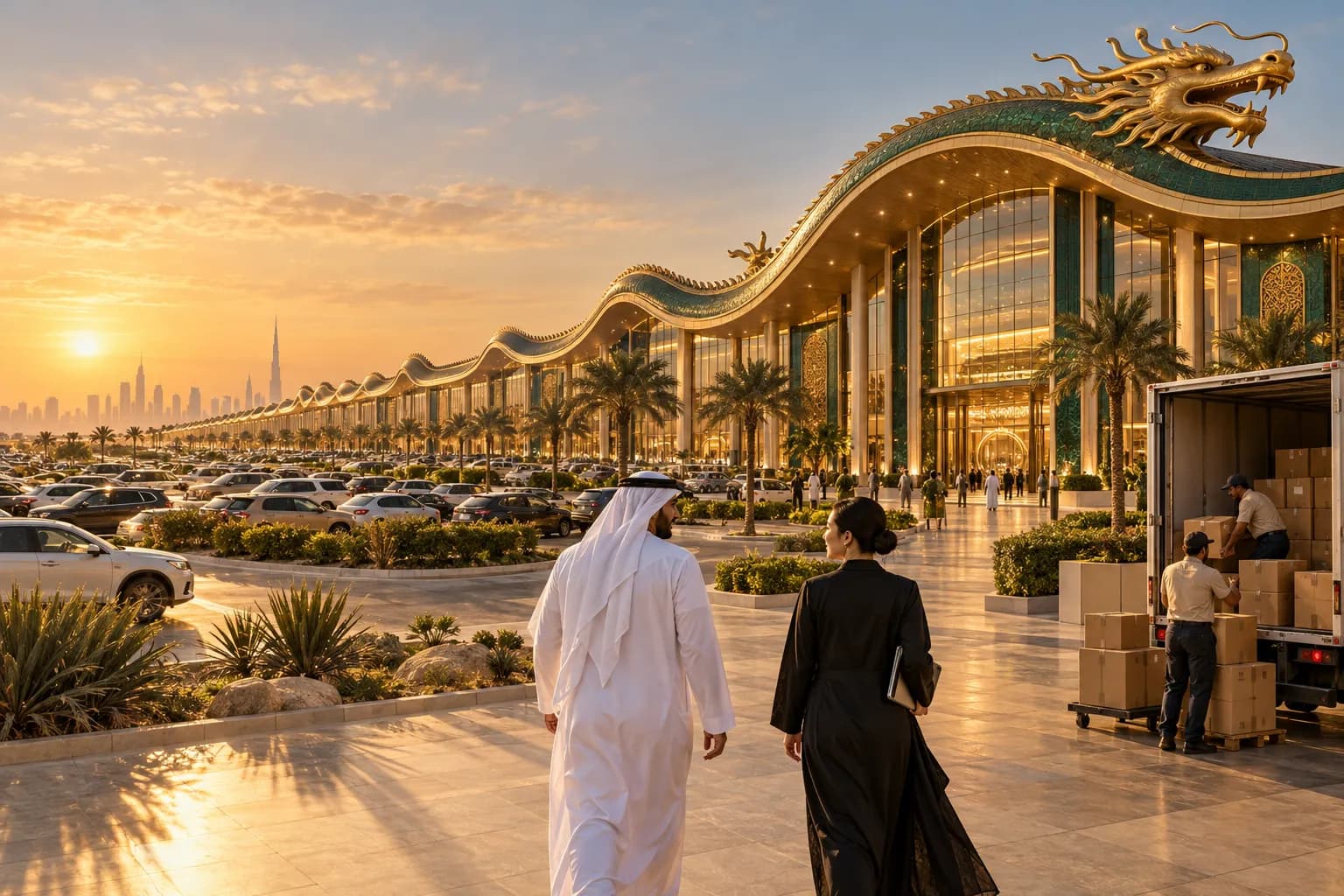
- Dragon Mart, Dubai. With 3,500+ outlets, it's the Gulf's showroom and wholesale base for Chinese goods: building materials, furniture, electronics and household items. See the Dragon Mart guide.
- noon factory sourcing. Noon is piloting direct procurement from Chinese industrial belts from the second half of 2026. Factories can approach noon's China team directly.
- A Saudi distributor first. For bulky or industrial goods, partner with a Saudi importer that already has a SABER account, then build your own ecommerce channel.
Start with these China-seller guides

noon Global Shipping vs FBN, and the seven onboarding steps.
Documents, 2026 incentives and FBA inbound cashback.
Product and shipment certificates: cost, timing and how to get them first time.

One hub for the Gulf, or separate stock for Saudi Arabia?
PingPong, LianLian, WorldFirst, Payoneer and Airwallex.

What's selling in 2026 and how to pick products.
In this section





Frequently asked questions
Not to start. noon Global Shipping and Amazon Global Selling both accept a Chinese business licence. A local company becomes useful later, when you want a local bank account, your own payment gateway or local-seller programmes.
Sources & further reading
- China–GCC relations (2025 trade figures) — Ministry of Foreign Affairs of the PRC
- noon Global Shipping program — noon Seller Help Center
- Amazon Middle East 2026 benefits for Chinese sellers — Amazon Global Selling China
- A 6x premium market where Chinese sellers are under 10% — Cifnews (雨果跨境)
- PingPong × noon official partnership — PingPong
- USD collection for noon Saudi and UAE stores — LianLian Global
- SABER product conformity platform — Saudi Standards, Metrology and Quality Org. (SASO)
- E-stores customers: customs rules for individuals — Zakat, Tax and Customs Authority (ZATCA)
This guide is for general information only and is not legal, tax or financial advice. Rules and fees change — always confirm with the official source or a licensed advisor.

Maya is MiddleEastEcom's lead guide and editor. She researches GCC marketplaces, payments and regulations and turns them into practical playbooks for sellers.
Meet Maya