
- English reaches almost every UAE resident, so you can launch in English and start selling this month.
- About 80% of Emiratis choose Arabic on self-service screens, and Arab expats split about half and half.
- UAE consumer law requires Arabic product information, terms and a dated Arabic invoice from UAE-registered sellers and platforms.
- On noon, English-only listings may not show on the Arabic site. Add at least an Arabic title to every SKU.
- Human translation of a 100-product store costs about AED 5,000–9,000. An order lift of 5–8% pays it back in six months.
Sell in English first. Add Arabic soon after.
That's the short answer for the UAE. About 9 in 10 residents are expats, and English is the everyday language of shopping, from Dubai Mall to the noon app.
But English alone leaves money on the table. Emiratis are among the country's richest shoppers, and most of them prefer Arabic. Marketplaces and consumer law also expect some Arabic from you.
Here's who speaks what, what the rules require, what it costs and the order to roll Arabic out. It's part of our GCC localization guides.
Who actually shops in the UAE?
The UAE is an expat country. It has about 11.3 million residents.
Roughly 88–89% of them are foreign nationals. Emiratis make up the other 11–12%.
The biggest communities are Indian, Pakistani, Bangladeshi, Filipino and Egyptian. Add large Levantine Arab and Western groups, and you get a market where English is the common ground.
So what language do these people choose when given a screen and two buttons? A 2024 study watched 566 people use ATMs in Dubai malls. A self-service screen with two language buttons is a good stand-in for a shopping site.
Three groups, three different answers:
- Non-Arab expats use English almost every time.
- Arab expats split down the middle. Tech-comfortable users lean English.
- Emiratis mostly pick Arabic, and they're among the highest spenders.
Bottom line? English reaches about 90% of residents. Arabic is how you win the remaining Emiratis and half the Arab expats.
Want the full audience profile? See our UAE ecommerce guide.
What does UAE law say about Arabic?
No UAE law forces your website to be in Arabic. But several rules require Arabic content, whatever language your storefront uses.
What about a store registered outside the UAE? The UAE government portal says the consumer law doesn't cover purchases from ecommerce businesses registered abroad. Sales through a UAE-registered marketplace are still covered, and your labels still need Arabic where the product rules require it.
The practical upshot: even an English-first UAE store keeps Arabic versions of its terms, warranty, invoices and labels. Check the full list in our UAE ecommerce law guide and the GCC product labelling rules.
How do Amazon.ae and noon handle language?
Both marketplaces run in English and Arabic. They treat your listing languages differently, though.
Amazon.ae launched as an English-language store with Arabic support. You can list in English and add Arabic through Build International Listings or by hand.
Noon makes English mandatory for a listing to go live in the UAE and Saudi Arabia. Arabic is optional.
The catch? Noon doesn't translate seller content, and English-only SKUs may not appear on its Arabic site.
That matters because practitioners say noon skews towards UAE nationals, Saudis and Arab expats. Those are exactly the shoppers most likely to browse in Arabic.
So add at least an Arabic title to every noon listing. Our guides to selling on noon UAE and Amazon.ae cover the full listing setup.
How do UAE shoppers search: Arabic or English?
UAE shoppers search in both. And they often mix them in one query.
Google Trends shows the pattern clearly. Take the iPhone, one of the most searched products in the Gulf:
In the UAE, people type brand and model names in English. In Saudi Arabia, Arabic script runs neck and neck.
Arabic searches still matter in the UAE, especially for generic product words. UAE shoppers search for shoes as حذاء or the local word جوتي, almost never جزمة. And "discount code" is searched as كود خصم, not the textbook رمز خصم.
Here's the opportunity. Only about 0.6% of websites are in Arabic.
Many Arabic product searches in the Gulf show thin category pages and machine translations. A well-written Arabic page can rank faster than its English twin.
A good starting ratio for UAE content is roughly 60% English and 40% Arabic effort. Adjust it once Search Console shows you which queries bring sales. For the method, read our bilingual SEO guide.
When does going bilingual pay off?
Bilingual pays when your best customers include Emiratis or Arab expats. English-only is fine when they don't.
| Your main buyer | Language plan | Why |
|---|---|---|
| Western and Asian expats in Dubai | English store, Arabic titles on marketplaces, Arabic invoices | This group shops in English almost every time |
| Mixed Dubai and Abu Dhabi families | Full English plus Arabic store | Arab expats split half and half |
| Emirati women and families (abayas, oud, luxury, kids) | Arabic-led content and ads, English second | About 80% of Emiratis choose Arabic |
| Sharjah and northern emirates | Arabic high on the list | Arabs outside Dubai choose Arabic far more often |
| GCC-wide, including Saudi Arabia | Arabic as a core language | You'll need it for Saudi anyway |
How big is the lift? Robusta, a MENA ecommerce agency, reports that Arabic interfaces convert 20–35% better than English-only ones. The next section shows you can pay back the cost with a fraction of that.
Worked example: what Arabic costs and when it pays back
Let's price Arabic for a typical small UAE Shopify store.
Here's the store:
- 100 products, about 150 words each, plus 5,000 words of pages and policies.
- That's roughly 20,000 words in total.
- 150 orders a month at an average of AED 400.
- About AED 120 of gross profit per order.
And here are the one-off costs:
| Item | Cost |
|---|---|
| Translation app: Shopify Translate & Adapt | Free |
| Human translation by a UAE agency, 20,000 words at AED 0.25–0.45 a word | AED 5,000–9,000 |
| RTL-ready theme (Horizon is free) | AED 0 |
| Total | AED 5,000–9,000 |
The per-word rate is what Dubai agency Aburuf charges for general translation. It matches the AED 2,000–8,000 that Al Jindi Advisory quotes for adding Arabic to a typical business website.
So when does it pay back? At AED 120 profit per order, AED 5,000 equals about 42 extra orders. Spread over six months, that's 7 extra orders a month.
Seven extra orders on a base of 150 is a lift of under 5%. At the top of the range, AED 9,000 needs about 13 extra orders a month, a lift of about 8%.
Both are far below the 20–35% Robusta reports. You'd hit them by reaching only a small slice of the Emirati and Arab-expat shoppers your English store misses.
After payback, Arabic keeps costing very little. You mostly pay to translate new products and seasonal campaigns.
How to roll out Arabic in the right order
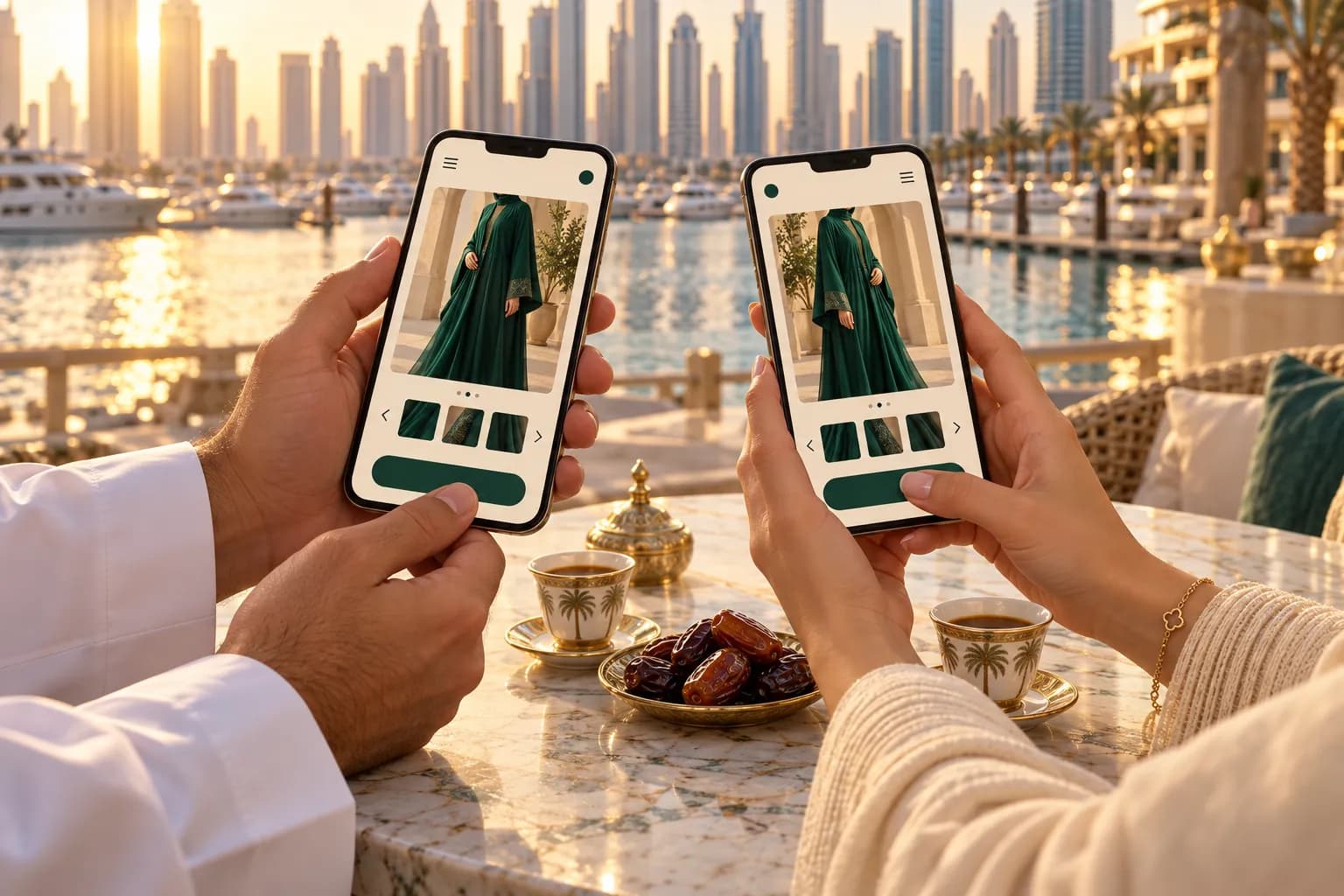
You don't need to translate everything on day one. Start where Arabic earns or protects the most money.
- 1
Cover the legal basics
Get Arabic versions of your terms, returns, warranty and invoice template. Put Arabic on product labels where the rules require it.
- 2
Add Arabic titles on marketplaces
Give every noon and Amazon.ae listing an Arabic title and key bullets, so Arabic browsers can find it.
- 3
Translate your best sellers
Fully translate the 20% of products that bring most of your revenue, plus the homepage, menus and checkout.
- 4
Launch Arabic ads
Test Arabic or Gulf-dialect creative on Instagram, Snapchat and Google against your English ads.
- 5
Fill in the long tail
Machine-translate the rest of the catalogue, then spot-check titles and specs with a native reviewer.
- 6
Measure and adjust
Compare Arabic and English conversion and return rates in your analytics, then shift effort to what sells.
Building on Shopify? Our Arabic Shopify store guide walks through themes, apps and the Arabic checkout step by step.
How the UAE differs from Saudi Arabia
If you plan to sell across the Gulf, don't copy your UAE language plan to Saudi Arabia. The two markets sit at opposite ends.
| UAE | Saudi Arabia | |
|---|---|---|
| Nationals as a share of residents | About 11–12% | 55.6% |
| Default storefront language | English, with Arabic alongside | Arabic, with English as a switch |
| Content effort split | About 60% English / 40% Arabic | About 70% Arabic / 30% English |
| Brand searches | Mostly Latin script | Arabic and Latin script about equal |
| Ad creative | English plus Arabic tests | Saudi-dialect Arabic first |
| Can you launch English-only? |
Saudi shoppers search, browse and buy in Arabic. That's why many English-only brands start in the UAE, then localise for Riyadh. See our UAE vs Saudi Arabia comparison for the rest of the differences.
Notes for marketplace-only sellers
- English listings are enough to go live on Amazon.ae and noon.
- Add Arabic titles and key bullets to your top SKUs first, especially on noon.
- Noon doesn't translate seller content, so budget for a translator or a localisation agency.
- Keep Arabic copies of your warranty and returns terms ready for customer questions.
Notes for Shopify and own-store sellers
- Use separate Arabic and English URLs with hreflang, never one mixed page.
- Arabic isn't one of Shopify's pre-translated checkout languages, so translate checkout strings yourself.
- Keep Western digits and VAT-inclusive AED prices in both languages.
- Need help? Our Shopify localization services cover translation, RTL fixes and Arabic SEO.
Notes for Chinese and other non-English sellers
- Translate your source copy into English first, then into Arabic from a clean English master. It keeps both versions consistent.
- Lock a glossary of product names, sizes and units before you translate a whole catalogue.
- Use a translator with native Gulf reviewers. You'll find options in our Arabic translation agency directory.
Frequently asked questions
No law bans an English storefront. But if your business or the platform you sell on is registered in the UAE, consumer law requires product information, terms, warranty details and invoices to be available in Arabic. Many products also need Arabic on the physical label. So you can market in English, as long as the Arabic paperwork exists.
Sources & further reading
- Arabic or English? Multilingual users' preferences in Dubai's ATM transactions — Frontiers in Communication (2024)
- Consumer protection — UAE Government portal (u.ae)
- Title and language requirements for seller SKUs — noon Partners
- Selling in the Middle East — Amazon Global Selling
- GSO 9/2013 Labeling of Prepackaged Food Stuffs — GCC Standardization Organization (via WTO)
- Content languages for websites — W3Techs
- Google Trends (12-month comparisons, UAE and Saudi Arabia) — Google
- Arabic localization in MENA — Robusta
- Translation services in Dubai, Abu Dhabi & all UAE: pricing — Aburuf (2025)
- Do you need an Arabic website in the UAE? — Al Jindi Advisory (Oct 2026)
This guide is for general information only and is not legal, tax or financial advice. Rules and fees change — always confirm with the official source or a licensed advisor.

Maya is MiddleEastEcom's lead guide and editor. She researches GCC marketplaces, payments and regulations and turns them into practical playbooks for sellers.
Meet Maya