
- The UAE is China's biggest export market in the Middle East, so the Shenzhen-to-Dubai supply chain is well worn.
- Pick one of five routes: noon Global Shipping, Amazon.ae, your own store with DDP parcels, a Dubai warehouse, or a free-zone company.
- Regulated products need an ECAS certificate. MoIAT's fees total AED 1,720 per certificate, and a UAE licence holder applies.
- Foreign sellers holding UAE stock register for 5% VAT from the first sale. On noon Global Shipping, noon handles destination VAT.
- A one-visa free-zone company costs about AED 10,250–25,000 in year one, and unlocks your own store, local payouts and a noon store for Saudi Arabia.
Your products are made in China. Your shoppers are in Dubai, Abu Dhabi and Sharjah. That's one of the shortest, busiest trade lanes into the Gulf.
The UAE is China's largest export market in the Middle East. Containers from Shenzhen and Ningbo reach Jebel Ali every week, and Dubai re-exports them across the region.
So the hard part isn't logistics. It's choosing how you sell.
Here are the five routes, what each costs in year one, and the ECAS, VAT and payout steps that go with them.
Why sell China-made products in the UAE?
UAE shoppers are rich, online and used to next-day delivery. Many of the things they buy were made in China. Here's why the timing suits you:
- Shoppers spend big online. About 15.7% of UAE retail already happens online, the highest share in the Gulf.
- English works. Around 9 in 10 residents are expats, so you can launch before your Arabic listings are perfect.
- Low, simple taxes. VAT is 5%, and most goods pay 5% duty.
- Dubai is a springboard. Stock in Dubai can reach Saudi Arabia and the rest of the GCC through noon and Amazon.ae.
- Platforms want you. Amazon and noon both run recruitment drives and rebates for sellers who source from China.
New to the market? Start with our UAE ecommerce guide.
What are the five ways to sell from China to the UAE?
You either ship each order from China, or ship stock to the UAE ahead of time. Your choice decides who clears customs, who registers for VAT and how fast parcels arrive.
| noon Global Shipping | Amazon.ae (Global Selling) | Own store + DDP parcels | Dubai warehouse (3PL, FBA, FBN) | Own free-zone company | |
|---|---|---|---|---|---|
| Best for | Testing on noon | Selling on Amazon.ae | Shopify brands | Proven best-sellers | Your own store and GCC growth |
| Who it's open to | China-registered companies only | Most countries | Anyone | Anyone with an IOR | Anyone |
| UAE licence needed | No, with an IOR | ||||
| Who registers for UAE VAT | noon handles it | You (non-resident) | The DDP line prices it in | You | You |
| Delivery to shopper | Cross-border | Prime one-day with FBA | About 5–12 days | Next day | Next day |
| Stock risk | None | Medium | Low | Medium | Medium |
1. noon Global Shipping (NGS)
NGS lets a company registered in China sell on noon in the UAE and five other Gulf states. You drop orders at noon's Shenzhen hub. Noon flies, clears and delivers them, and pays the destination VAT.
You need no UAE licence and no UAE VAT number. See how to test and scale in our guide to noon for China-based sellers.
2. Amazon.ae through Global Selling
Foreign companies open an Amazon.ae account through Amazon Global Selling. With FBA (Fulfilment by Amazon), your stock gets Prime one-day delivery across the UAE.
Amazon won't act as your importer of record, so a forwarder or your own UAE company takes that role. Our guide to Amazon Middle East for China-based sellers covers the current rebates.
3. Your own store with DDP parcels
DDP (Delivered Duty Paid) lines collect orders in China, then fly, clear and deliver them. Shoppers pay nothing at the door. It's the lightest way to test a Shopify store aimed at the UAE.
4. Stock in a Dubai warehouse
Once a product sells every week, ship it by sea to Amazon FBA, noon FBN (Fulfilled by noon) or an independent 3PL. Dubai warehouses deliver next day to Dubai, Sharjah and Abu Dhabi.
Freight rates, ports and customs steps are all in our China to UAE shipping guide.
5. Your own free-zone company
A free-zone company is 100% foreign-owned, and some zones issue a licence within a day. It makes you the importer, lets you hold your own ECAS certificates and opens UAE payment gateways for your own store.
It also unlocks noon's Global store, which lets a UAE company sell into Saudi Arabia from UAE stock.
What does each route cost in year one?
Marketplace routes cost almost nothing up front. A free-zone company has a fixed annual cost but unlocks more channels. Here's how the fixed costs compare, before stock and freight.
For example, say a Shenzhen brand sells silicone kitchen tools. They aren't a regulated product, so no ECAS certificate is needed.
| Route | Fixed cost, year one | What you get |
|---|---|---|
| noon Global Shipping | AED 0 | noon in six Gulf states, cross-border delivery |
| Amazon.ae via Global Selling | AED 0 (monthly plan fee waived) | Amazon.ae, plus IOR fees per shipment |
| RAKEZ free zone, one visa | About AED 10,250 | Own store, UAE gateway, noon Global store, Emirates ID |
| Meydan free zone (Dubai), one visa | About AED 20,750 | Same, with a Dubai address |
Is the licence worth it? If the brand keeps 25% of each sale as profit, the RAKEZ company pays for itself after about AED 41,000 of sales. That's roughly AED 3,400 a month.
Selling a regulated product, like a phone charger? Budget for one ECAS certificate per product model on top. Compare zones in our guide to the best UAE free zones for ecommerce.
What do ECAS, VAT and a trade licence mean for you?
Three rules shape every China-to-UAE plan. Each one is a short, standard step.
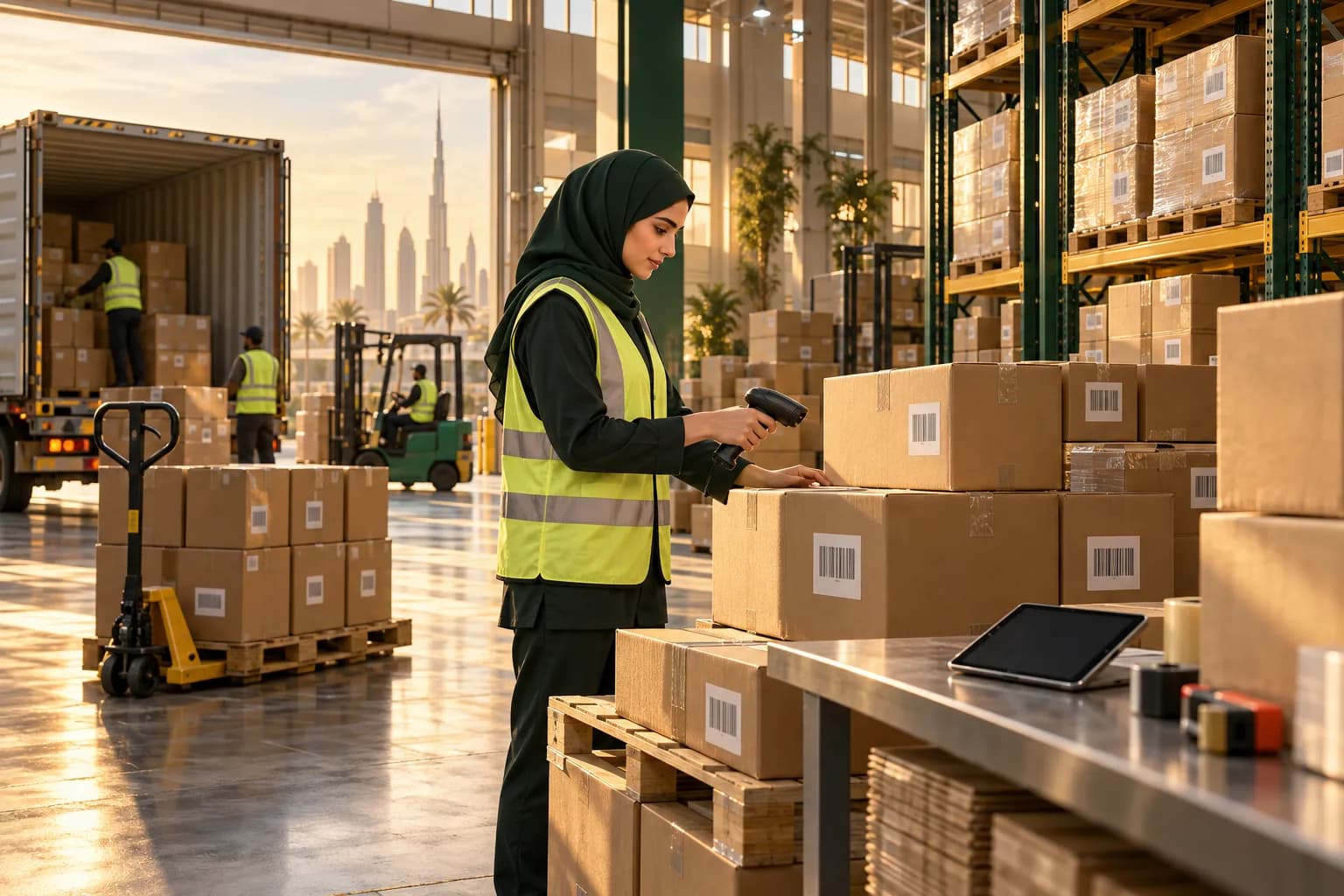
- ECAS. It's the UAE's product safety scheme, run by MoIAT (the Ministry of Industry and Advanced Technology). Electricals, toys and cosmetics are typical regulated products. MoIAT's three fees add up to AED 1,720 per certificate. A factory evaluation, if MoIAT asks for one, costs AED 2,500 per assessor-day. See our ECAS certification guide.
- VAT. UAE VAT is 5%. Local companies register above AED 375,000 of sales. Foreign sellers holding UAE stock get no threshold, so they register before the first sale. Registration on EmaraTax is free. Our UAE VAT guide walks through it.
- Trade licence. Marketplace cross-border selling doesn't need one. Your own store with UAE stock does. A free zone is the cheapest way in.
Check what's inside a VAT-inclusive price, and whether you must register:
GCC VAT calculator
Add or extract VAT, then check whether you need to register
Country
Calculation
VAT rate 5%
Net
AED 190.48
VAT
AED 9.52
Gross
AED 200.00
Do I need to register?
Compare your annual taxable sales with the registration thresholds · UAE
Your business
Past 12 months, or what you expect over the coming period
- Mandatory: > AED 375,000
- Voluntary: > AED 187,500
Voluntary registration available
You are above the voluntary threshold. Registering lets you reclaim input VAT on stock, imports and ads, but you must then charge VAT and file returns.
AED 125,000 to go before mandatory registration
Estimates based on published VAT rules as of Oct 2026. Not tax advice; confirm with ZATCA, the FTA, NBR, the Oman Tax Authority or a licensed tax agent.
Running a UAE company already? E-invoicing becomes mandatory in two waves. First you appoint an accredited provider, then you go live:
- 30 Oct 2026Large companies appoint a provider
Revenue of AED 50 million or more.
- 1 Jan 2027Large companies go live
Your invoices to other businesses go out through the accredited provider.
- 31 Mar 2027Everyone else appoints a provider
Revenue under AED 50 million, which covers most new free-zone sellers.
- 1 Jul 2027Everyone else goes live
Book your provider early, before the March rush.
How do you get paid?
It depends on the route and where your company banks:
- noon pays weekly, on Thursdays, once your balance reaches AED 1,000. NGS sellers receive their USD transfer price after each delivery.
- Amazon.ae pays to your bank account every 14 days.
- Your own store gets paid by its payment gateway, which needs a UAE company.
If your company banks in China or elsewhere, a collection account receives the payouts. Payoneer and WorldFirst both work with noon and Amazon.ae.
The withdrawal fee is the cost that adds up. WorldFirst charges at most 0.3%, while Payoneer charges up to 2%. On AED 40,000 a month, that gap is about USD 2,200 a year.
The dirham is pegged at AED 3.6725 to the dollar, so USD payouts carry no surprise swings. Compare all five providers in our payout providers guide.
How to start: a five-step plan
- 1
Check your product's rules
Find the HS code and check whether ECAS, TDRA or Dubai Municipality regulates it. Ask the factory for its latest test reports.
- 2
Pick a test route
noon Global Shipping if your company is registered in China. If it isn't, Amazon.ae through Global Selling or a DDP parcel line.
- 3
List in English and Arabic
English gets you selling. Arabic titles reach Emiratis and Arab expats searching in Arabic.
- 4
Move winners into Dubai stock
Book an importer of record and a forwarder, then ship 6–8 weeks of stock to FBA, FBN or a 3PL.
- 5
Open a free-zone company
Once a few products sell every week, a licence unlocks your own store, local payouts and noon's Global store for Saudi Arabia.
Notes for Gulf importers
- With a UAE trade licence, you import in your own name and hold your own ECAS certificates.
- Buy FOB, so your forwarder controls the freight and the Jebel Ali charges.
- For quick tests, buy from wholesalers at Dragon Mart in Dubai before ordering direct from the factory.
Notes for brands manufacturing in China
- If your company isn't registered in China, NGS isn't open to you. Amazon.ae or a noon international seller account, plus an IOR, is the usual first step.
- Keep the manufacturer name and model numbers identical across test reports, ECAS certificates and invoices.
- Get Arabic labels done at the factory. Relabelling in Dubai costs far more.
Notes for Chinese factories and brands
- A free-zone company is the natural second step after NGS or Amazon. Our guide to UAE company setup for Chinese businesses covers zones, visas and bank accounts.
- Dubai or Riyadh first? Our Dubai vs Riyadh warehouse comparison runs the numbers.
- Selling in Saudi Arabia too? The Saudi Arabia from China guide covers SABER and the Saudi routes.
Frequently asked questions
Yes. Delivering online orders to UAE shoppers from a free-zone company is common, as long as the zone confirms your activity in writing. Opening a physical shop on the mainland is different and needs a mainland licence or permit.
Sources & further reading
- China–UAE relations (trade figures) — Ministry of Foreign Affairs of the People's Republic of China
- noon Global Shipping program — noon Seller Help Center
- Important information for international sellers (importer of record) — Amazon Seller Central
- Issue Conformity Certificates for Regulated Products (ECAS) — UAE Ministry of Industry and Advanced Technology (MoIAT)
- Registration for VAT — UAE Federal Tax Authority
- E-commerce setup packages — Ras Al Khaimah Economic Zone (RAKEZ)
- UAE e-commerce market size reaches AED 42.2bn in 2025 — Zawya / EZDubai / Euromonitor International
- eInvoicing — UAE Ministry of Finance
- WorldFirst pricing — WorldFirst
This guide is for general information only and is not legal, tax or financial advice. Rules and fees change — always confirm with the official source or a licensed advisor.

Maya is MiddleEastEcom's lead guide and editor. She researches GCC marketplaces, payments and regulations and turns them into practical playbooks for sellers.
Meet Maya